Accelerating the Development of New Energy Storage Systems and High-End Power Applications
As the global energy transition continues to accelerate and carbon neutrality targets gain momentum, the role of energy storage technologies is becoming increasingly critical within modern power systems. Beyond expanding renewable generation capacity, the focus of the new energy industry is shifting toward improving system stability, efficiency, and reliability. Within this context, super capacitor technology is experiencing sustained development and is emerging as a key component of next-generation energy storage architectures, particularly in high-power and mission-critical applications.
Growing Demand for Advanced Energy Storage Solutions
The rapid growth of renewable energy sources such as wind and solar power has introduced new challenges to power grids worldwide. Intermittency, volatility, and the need for fast-response regulation have placed unprecedented demands on energy storage systems. Traditional energy storage technologies, while effective for long-duration energy supply, often face limitations when responding to high-frequency power fluctuations or short-duration, high-power demands.
Super capacitors, characterized by their extremely fast charge-discharge capability and long cycle life, have gained attention as a complementary technology rather than a replacement for batteries. Their ability to respond within milliseconds makes them particularly well-suited for applications requiring instantaneous power delivery and frequent cycling, positioning them as an important solution for modern energy systems.
From Single Technology to Hybrid Energy Storage
One of the most notable trends in recent years is the industry’s shift toward hybrid energy storage systems. Rather than relying on a single storage technology, system designers are increasingly combining super capacitors with lithium-ion batteries to leverage the strengths of both.
In such configurations, super capacitors handle short-term, high-power demands, while batteries provide sustained energy output. This division of roles not only enhances overall system performance but also reduces stress on battery cells, extending their service life and improving system safety. As a result, hybrid storage architectures are gaining traction across grid-level, industrial, and commercial energy applications.
Expanding Applications in Power Grids
Power grid applications represent one of the earliest large-scale adoption areas for super capacitor technology. Grid frequency regulation, voltage stabilization, and power quality management require ultra-fast response and high reliability—capabilities that align closely with the inherent advantages of super capacitors.
In frequency regulation systems, super capacitors can quickly absorb or release energy to counteract sudden imbalances between supply and demand. Their high cycle life allows them to operate continuously with minimal degradation, making them particularly attractive for grid operators seeking long-term, low-maintenance solutions. As grids evolve to accommodate higher shares of renewable energy, the role of super capacitors in supporting grid stability is expected to expand further.
Industrial and High-End Equipment Applications
Beyond power grids, super capacitor technology is increasingly being adopted in industrial and high-end equipment applications. In variable-frequency motor drives, automated production lines, and energy recovery systems, rapid power response and operational reliability are essential.
Super capacitors are often integrated into these systems to manage peak power demands, smooth load fluctuations, and recover braking or deceleration energy. By doing so, they help improve energy efficiency while reducing wear on primary power sources. In industries where equipment downtime can result in significant losses, the reliability and durability of super capacitors offer a clear advantage.
Automotive and Transportation Sector Developments
The automotive sector has also become an important area for super capacitor adoption. While electric vehicles primarily rely on batteries for energy storage, super capacitors are increasingly used in auxiliary power systems, start-stop systems, and regenerative braking applications.
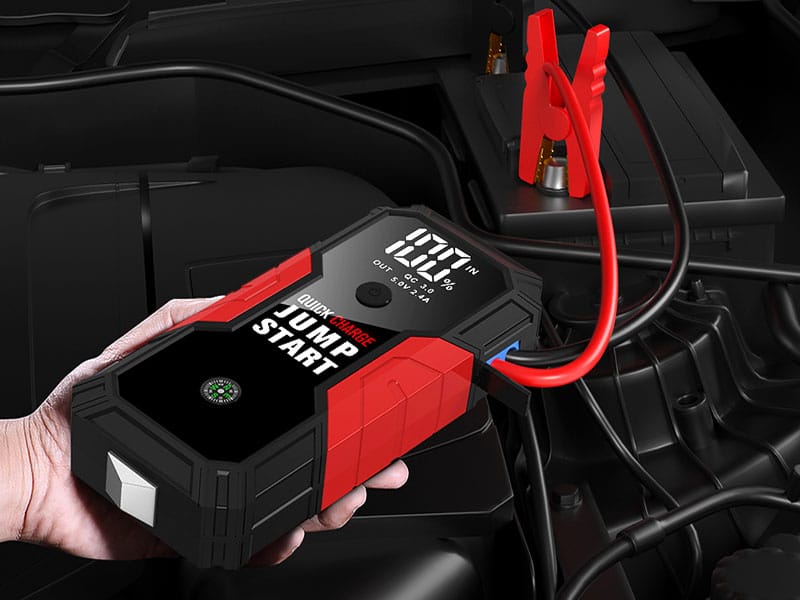
In particular, automotive jump starters based on super capacitor technology are gaining attention in both consumer and professional markets. Compared with traditional lithium battery-based jump starters, super capacitor solutions offer faster charging, superior low-temperature performance, and significantly longer cycle life. These characteristics make them especially suitable for emergency use, cold climates, and applications requiring high reliability after long periods of storage.
Growth of Portable and Emergency Power Applications
In recent years, demand for portable and emergency power solutions has increased steadily, driven by outdoor recreation, mobile work environments, and heightened awareness of disaster preparedness. Portable power stations and backup power devices are no longer niche products but essential tools for a wide range of users.
Super capacitor technology is contributing to this segment by enhancing safety and performance, particularly in scenarios involving frequent use or harsh environmental conditions. When combined with battery systems, super capacitors can improve power output stability and reduce the risk of performance degradation over time, addressing key concerns among end users.
Performance Advantages Driving Continued Adoption
The continued development of super capacitor technology is closely linked to its core performance advantages. These include high power density, ultra-fast response, wide operating temperature range, and exceptional cycle life. Unlike conventional batteries, super capacitors can endure hundreds of thousands or even millions of charge-discharge cycles with minimal performance loss.
Such characteristics make them well-suited for applications where reliability and consistency are more critical than energy density alone. As materials science and manufacturing processes continue to advance, ongoing improvements in energy density and cost efficiency are further expanding the practical application range of super capacitors.
Market Trends and Industry Outlook
From a market perspective, the super capacitor industry is transitioning from niche adoption toward broader commercialization. While early applications were largely confined to specialized industrial and grid projects, super capacitors are now increasingly integrated into mainstream energy systems.
Industry analysts note that future growth will likely be driven by three key factors: the expansion of renewable energy, increasing demand for high-reliability power systems, and the ongoing evolution of hybrid energy storage solutions. As standards and system integration practices mature, adoption barriers are expected to decrease, opening new opportunities across multiple sectors.
Toward System-Level Energy Solutions
Another significant trend shaping the industry is the shift from product-level competition to system-level solutions. Customers are no longer focused solely on individual components but are seeking integrated solutions that address performance, reliability, lifecycle cost, and scalability.
In this context, super capacitor technology is increasingly viewed as a strategic element within larger energy systems rather than a standalone component. Successful implementation depends not only on the performance of the super capacitor itself but also on system design, control strategies, and application-specific customization.
Future Prospects
Looking ahead, the role of super capacitors in the global energy landscape is expected to grow steadily. As energy systems become more complex and performance requirements continue to rise, the demand for fast, reliable, and durable energy storage solutions will intensify.
Super capacitor technology, with its unique combination of speed, durability, and adaptability, is well-positioned to support this evolution. From grid stabilization and industrial automation to automotive applications and portable power systems, super capacitors are likely to remain a vital enabler of next-generation energy solutions.
As the industry continues to innovate and refine hybrid storage architectures, super capacitors will play an increasingly important role in enhancing system resilience, efficiency, and sustainability—helping to shape the future of global energy infrastructure.